Friday, February 17, 2012

Looking for God's Stuff

What would the things of God be?  

I imagine God toying with a nebula or stoking the flames of a supernova.  

In my last post Trifecta, I said that what we should be doing - rather than stressing - is seeking after the things of God.  Well, what are the 'things of God'?  And how do we seek after them?  

That phrase is a reference to the passages in Matthew 6 and Luke 12 where Jesus tells his disciples not to worry about the things of this earth.  What is actually stated there in both passages is that the disciples should 'seek after His kingdom'.  The Matthew passages also adds 'His righteousness'.  There are some other somewhat enigmatic references in these chapters about selling possessions, money belts that don't wear out, storing up things in heaven and about how the eye gives light to the whole body. 

Rather than try to explain all this, allow me to simply post the passages and get your thoughts.

Matthew 6
 24 “No one can serve two masters. For you will hate one and love the other; you will be devoted to one and despise the other. You cannot serve both God and money.
 25 “That is why I tell you not to worry about everyday life—whether you have enough food and drink, or enough clothes to wear. Isn’t life more than food, and your body more than clothing? 26 Look at the birds. They don’t plant or harvest or store food in barns, for your heavenly Father feeds them. And aren’t you far more valuable to him than they are? 27 Can all your worries add a single moment to your life?
 28 “And why worry about your clothing? Look at the lilies of the field and how they grow. They don’t work or make their clothing, 29 yet Solomon in all his glory was not dressed as beautifully as they are. 30 And if God cares so wonderfully for wildflowers that are here today and thrown into the fire tomorrow, he will certainly care for you. Why do you have so little faith?
 31 “So don’t worry about these things, saying, ‘What will we eat? What will we drink? What will we wear?’ 32 These things dominate the thoughts of unbelievers, but your heavenly Father already knows all your needs. 33 Seek the Kingdom of God[d] above all else, and live righteously, and he will give you everything you need.
 34 “So don’t worry about tomorrow, for tomorrow will bring its own worries. Today’s trouble is enough for today.

Luke 12 adds:
 26 And if worry can’t accomplish a little thing like that, what’s the use of worrying over bigger things?
 32 “So don’t be afraid, little flock. For it gives your Father great happiness to give you the Kingdom.
 33 “Sell your possessions and give to those in need. This will store up treasure for you in heaven! And the purses of heaven never get old or develop holes. Your treasure will be safe; no thief can steal it and no moth can destroy it. 34 Wherever your treasure is, there the desires of your heart will also be.

What are we supposed to be doing?
And what are we usually doing that isn't really all that meaningful?


Wednesday, February 8, 2012

Trifecta

British man on Tuesday at 11:45
According to a survey done in Great Britain, Tuesday at 11:45 is the most stressful time of the week.  Particularly if you coast through Monday and allow your work to build up.  I had a patient today who's an attorney.  She said stress is a major factor in her life all the time - even though she's reduced her workload from 80 hours a week to 65.  

How's your stress level?  

It's something we face, at some level and in some way, every day.  It affects us in multiple ways.  
Some are obvious, some not so obvious and some are probably not even known yet.  

You're probably familiar with what goes on mentally when you are stressed.  Worry, anxiety, feelings of impending doom, anger, frustration, fear, and so on.  Do you know what goes on physically?  

A hormone called Cortisol has been identified as being overproduced in people who describe being under elevated stress.  Cortisol is useful and necessary in the right amounts as it regulates blood pressure, heart functions, the body's use of fats and proteins, inflammatory response and 'fight or flight' response, improved memory, reduced pain, and increased energy among other things (www.cortisol.com).  But when it is chronically high, you can have suppression of thyroid function, cognitive impairment, increased blood pressure, decreased bone density, and blood sugar imbalances. High levels of cortisol can also lower your immunity and inflammatory responses, as well as slow down the wound healing process.  Chronic stress leads to a high concentration of cortisol in your body.  Chronic high concentrations of cortisol is toxic to brain cells and can cause short-term memory loss. A lifetime of high cortisol levels may be a primary contributor to Alzheimer's disease and senile dementia and is also a primary cause of osteoporosis.

Didn't think it was all THAT bad, did ya?

When I have patients at work tell me they are stressed, I usually give them a copy of an article from the newspaper by Dr. Bryant Stamford, the medical columnist.  My disclaimer is that it may not directly apply to their circumstances, but it's worth checking out.  In the article, Stamford describes some of the destructive properties of stress and he talks about the aspect of stress that comes from fear of the future.  He states that the past and future don't exist, except in our minds.  Yet we spend most of our time there, worrying about things that have already happened or that probably won't occur.  He says it's the ultimate stress-promoting Catch-22 - conjuring up fears and threats we can't do anything about.  One of my favorite pastors, D. James Kennedy, said that worry is like paying interest on a debt you will likely never owe.  

Most of what we worry about doesn't even come to pass, yet we suffer anyway.  This is important to understand for our present peace.  

I can look at some circumstances in my life right now, extrapolate them out based on current trends and decide that all is in fact lost and will turn out horribly.  Yet my own life is proof of the opposite.  Stamford says we need to come fully to the present and practice the critical life skill of living 'here and now'.

Back to cortisol.   
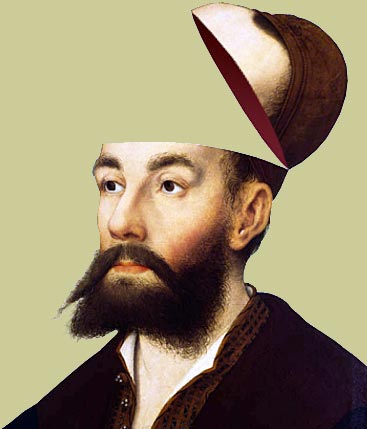
(Not a self-portrait)
One effect of the stress response is to break down adipose (fat) cells to move triglycerides (fat molecules) into the bloodstream for more energy. Your body would use the energy from triglycerides in the "fight or flight" physical responses to stress. But do you have increased physical activity in response to most of the stresses you experience in the modern world? Most people don't. Instead of burning the triglycerides, cortisol causes these unused fats to be re-deposited in the adipose tissues surrounding the belly.  This inspires me to coin a new phrase 'fear belly'.

This is one of the many reasons exercise is good for us.  It burns off the elevated 'free floating' fat molecules produced by stress AND increases the release of the happy hormones - endorphins - making you feel better which in turn also lowers stress.  Of course, a stronger heart, lower blood pressure, and lower weight are associated as well.  I implied at the beginning that all the negatives associated with stress haven't been fully understood yet, and I also believe that all the benefits of exercise cannot be overstated.  I've read that lifting weights strengthens your bones.  I didn't understand how that could occur, but here's a connection.  Exercise = lower cortisol = stronger bones.  And this is just one example.

In some of my favorite passages from the bible, Jesus uses the phrase 'do not worry' 3 times in Matthew 6:25-34 and it's repeated in Luke 12:11-29.  Read over those passages again.  God doesn't want us to stress.  It's not good for us and it's not necessary.  Yes, we'll have trials and difficult times that He can use to grow us, but if we rest in the assurance that He's going through them with us, that He works out everything for our best, and that we can fully trust Him because He cares for us and has our eternal best interests as an endpoint we can quit diminishing our daily level of joy and quit slowly killing ourselves.

Don't run after the things the world runs after - money, fame, power and pleasure.  That's a cortisol factory waiting to happen.  Seek after the things of God.  He knows what you need and what's best for you.  Jesus asks an interesting question in the above passages, 'if you can't even do the small task of adding a single hour to your life, why do you worry about all the rest?'.

Don't worry.

Why Trifecta?  Because this is a win on all 3 of the main topics this blog is supposed to be about.

Friday, January 27, 2012

STATS

I found it interesting that Generate Good? - the post about whether or not we have the ability to alter our genes through behavior - was the most viewed post in the last week.  In the last month, Superficialites was.  And of all time - it was Generate Good? followed closely by Insult to Injury, the post about offending others, from Romans 14.  I know you guys don't get to see the stats (at least I don't think you do) and thought you may find them interesting.

Another interesting thing - somehow this site gets quite a few hits off of the image associated with the post. 

Instilling Values

instill:  verb,  gradually but firmly establish (an idea or attitude, esp. a desirable one) in a person's mind

What do your kids value?  Is it what you value?  How do you 'establish' your values in their hearts and minds?  How were they 'established' in your mind?  Is your set of values different than your parents?  These are the million dollar questions I now open for exploration.

In your life, when you were young, did you do what your parents told you because 1) it seemed good and right to you? 2) they told you it was good and right and you believed them? or 3) you were going to get in trouble if you didn't?  

It may have been a combination of those things in varying percentages depending on the individual, but I'd venture a guess that for most of us it was mainly 3.  In other words, doing X or not doing Y, was not part of our value system.  But we may have complied in order to avoid our parent's wrath and/or punishment.  The highest 'value' was placed on avoiding a negative.  This can be true even in adulthood.  Just switch parents with law enforcement or social mores.  

But for most of us, especially Christians, we began to 'own' a different value system than the one we were born with.  One that's more like what our parents - if they were good role models - valued.  Good, kind, honest, self-sacrificing behavior.  

How does this happen?  

Certainly the Holy Spirit plays an important role in this.  But there are other factors too.  Many times, when we DO bad things, bad things HAPPEN to us.  I've wondered recently if this is the primary way we incorporate good thinking, and thus behavior, into our lives.  We compare good instruction and the results of following it, with the results of doing bad and then we 'get it'. 

Questions:
1.  Do Christians 'behave' correctly in order to avoid punishment.
2.  Is that a 'lower' or less mature reason for right behavior.  Should 'avoiding a negative' transition into 'receiving a positive' - or something even higher?
3.  What can we do to effectively cause our kids to 'buy in' to the way of life we think is best for them.

I know one method that's very powerful and it's simply - by example, by the way we live.  Our actions, for good or bad, speak much louder than what we say.  We need to have those 2 things in agreement with each other.  Not that we have to be perfect, but practicing as best we can the things we say we value.

Other than that, and the work of God, I don't know what else would work besides cold, hard experience.  Get smacked in the face, knocked on the ground, and kicked a few times and you start to learn (at least most of us do).  Unfortunately, that's not a much different model than how we started with our parents.  Do bad = get spanked/grounded/sent to room etc.

Last question:  what role does faith play in all of this.  We are instructed that the righteous will live by faith.  If we truly trusted God, and all that He says, we would obey Him without having to suffer through bad consequences that resulted from sin.  Wouldn't we?

I had lunch with Steve yesterday and he asked me what's the one thing, if I could only have one thing, that I'd want for my kids.  Salvation, I answered.  Right, he responded.  Therefore, everything else is secondary.  Hmmm...

Thursday, January 12, 2012

Superficialities?

I had a conversation recently with a friend who suggested that another mutual friend of ours needed to 'upgrade' his appearance in order to be more effective at his job.  I understood his point:  if you 'look' a certain way then people are more apt to go along with whatever it is that you want them to do.  The clothes make the man, dress for success, etc.  But I was reluctant to agree with my friend on the basis that the issue he was talking about seemed to be a superficial one.  

Or is it?  

This raises all kinds of questions with me.  Is it wrong to make judgements about people based on the way that they look?  We think the right answer is no, but this can go either way.  If you see a person who is dirty, dressed sloppily and shows no evidence of personal grooming; you could make the assumption that they are either 1) a homeless street person, or absent that, they are at least 2) undisciplined and apathetic, or 3) possibly mentally out of touch with reality.  These are all 'judgements' we can make.  The person may even have a heart of gold, but if they were a CPA, would you trust them with your retirement account?

What about people who are overweight?  I know some have health reasons that lead to obesity, but aren't most simply overeating and underactive?  And do those personal deficiencies in their behavior translate into other poor decision making?

Does the admonition to 'not judge' from Matthew 7 apply here?  That passage is routinely twisted out of context.  I think the warning there is against being hypocritically judgmental.  There is a difference between judging and being judgmental.  We have to make judgments every day in order to function.  We certainly wouldn't say the judicial system is unbiblical since there is judging going on.  There's even a book called Judges in the bible.

It is true that judgments can be made based on what we observe about others - there will be 'fruit' of the persons character and motives.  However, people can also make us think one thing is true by their words and actions, while the exact opposite may actually be the case.  We can be very good at hiding our true feelings and motivations from others - though not God.  

As I said in Off To The Races, racism takes the individual out of the picture.  It creates stereotypes that may have no connection to reality.  We wouldn't want to make those kinds of judgments.  Another big problem is comparing ourselves to each other in the way we look, or how eloquently we speak, or how talented we are at something.  When we do that, we are making judgments on superficial things.  Usually those assessments make us feel bad about ourselves if we determine that we don't match up, or prideful about ourselves if we determine we are 'better' than someone else.

What do you think about this issue?  Is there validity both ways?  
Is it always wrong to make decisions based on appearances?

Wednesday, January 4, 2012

The Shack Attack

The Shack is a Christian novel by Canadian author William P. Young, a former office manager and hotel night clerk, published in 2007.  The novel was self-published but became a USA Today bestseller, and it was the #1 Paperback trade fiction seller on the New York Times best sellers list from June 2008 to early 2010.  The title of the book is a metaphor for “the house you build out of your own pain”, as Young explained in a telephone interview.  He also states to radio host talk show Drew Marshall that The Shack "is a metaphor for the places you get stuck, you get hurt, you get damaged...the thing where shame or hurt is centered." (Wikipedia)

Two issues for me:

One:  The book
In this book, Mack, the main character, meets God at 'the shack' as 3 different persons.  Jesus is, appropriately, a Jewish carpenter.  The Holy Spirit is an Asian woman with flowing robes.  The Father is portrayed as a large, black woman.  The portrayal of this last character is the beginning of many of the issues some mainstream Christian leaders have with the book.  In the story, the Father explains to Mack why He needed to meet him in this form and it makes sense to me.  I don't read new-age, gender-blending subversiveness into this.  Also remember, this book is advertised as fiction, which it is.  It's not intended to be a systematic theology text.  However, our own Al Mohler called it 'dangerous fiction'.  Maybe that's the role a Christian leader who is the head of a major seminary needs to take - defender of the faith, no matter how innocuous or trivial the perceived threat is.  I, however, found many good things to be gleaned from the book - especially about the relational side of God - even though I did not agree with every statement the book made.

Two:  The church (little c)
Therefore, I find it sad when I hear that people who are being considered for church leadership are actually judged by church leaders on whether or not they take a stand against this 'heresy'.  You better keep your mouth shut if you liked it, or you're obviously in error or simply ignorant.  Plus you won't get 'promoted'.  If you're a person who thinks differently than the norm, you are to be feared or shunned.  Why?  Can't the church withstand a little scrutiny, or differences in opinion on these matters.  If not, then open dialogue is shut down and members are afraid to say what they think - to their own detriment.  I'll tell you what else people in the church are afraid to do - give voice to doubts.  I'd like a place where I can air my doubts without being attacked.  Just because I have doubts or questions about some things considered Baptist doctrine doesn't make me evil.  In fact, to honestly and fully explore them will give deeper and richer understanding into the topic and this whole thing called Christianity.  But not if I have to keep my mouth shut for fear of being categorized and ostracized. 

Well, I think you know I won't.  I wonder sometimes if it's my God-given role to be anti-establishment.  I know it would be much harder for me to say that if I was already part of the 'establishment'.  This is my argument against the institution.  There is pressure to conform.  We have to be able to distinguish between, and lovingly live in the tension of, unity and non-uniformity.

The quote is well known:
In essential things - Unity
In non-essentials, or debatable things, or matters of opinion - Liberty
In all things - Charity (or love)

Friday, December 30, 2011

What Time? Is It?

Another year draws to a close.

What is a year?

I like very fundamental questions.  Sometimes things are so common to our thinking that we get misled by the supposed obviousness of the situation.  Or maybe it's just a man's perspective as opposed to God's.

A year:  365 days?  What's a day?  24 hours?  What's an hour ... well, you get the picture.  We define time by more time.  But what is time really?  We call one cycle by the earth around the sun a year.  Or the perception of the sun rising 365 times.  But the sun doesn't really rise, the earth rotates us into it's view.  More perspective issues.  We normally think of all these things as being the passage of time. 

I propose that time is not real.  It's a concept.  It's an illusion of sorts.  We are subjected to changes as we are born, mature and die.  We call that the passage of time.  We use the concept of time to place events in a sequence.  We use a ticking clock to count off seconds and minutes and hours and call that time.  The other illusion that accompanies it is the idea that we've got plenty of it. 

God is not impacted by this concept of time.  How is that?  He doesn't change.  He doesn't get old.  He isn't any different now than yesterday or a million years ago, or a billion years ago, or...how far back can we go?  It doesn't matter because time is irrelevant when you talk about God, or eternity.  To speak of eternity as being timeless is more accurate than to speak of it as being unending time.

Here's the important part:  Life is short.  What are you doing with it?

We are repeatedly told by our Creator that life is a vapor, a mist, a flower that blooms in the morning and is gone by evening.  In other words - brief.  Why?  What's the point?  A couple of things come to mind.  As I said earlier, we have this incorrect idea that we've got plenty of time.  Is there something important we need to do?  We'll get to it - eventually.  Yet, the reality is - we aren't guaranteed even 1 more breath after this.  Also, we like to think very highly of ourselves.  We can accomplish great things.  Build huge monuments to our cleverness and ingenuity.  But we quickly fade away.  Even the monuments crumble and disappear over time.

What is truly lasting?  Only God, life for the believer, and those things we do by and for Him.
The spiritual is more 'real' than the physical, yet we are usually dominated by the physical.

No matter how old you are - 'time' is almost up.  Make the most of it.  Get started.

“All people are like grass...the grass withers and the flowers fall...but the word of our God endures forever.”